Taxes Are the Worst. Let's Make Next Year Less Painful.
Paying taxes sucks. Organizing all your stuff to file them sucks. And don't even get me started on why we have to do the math to figure out what we owe.
Okay, venting over. If you just filed, now is actually the perfect time to set yourself up for a smoother tax season next year — while it's all still fresh. Let's walk through the Who, What, Where, and When of getting your taxes organized.
Where: Pick a Home for Your Documents
If you only do one thing from this post, do this. Decide right now where all your tax-related documents will live — and commit to it.
Get something in the mail you don't have time to deal with? Great, toss it in the spot. Stumble across something that might be relevant? In it goes. The goal isn't perfect organization — it's knowing where to look when tax season rolls around.
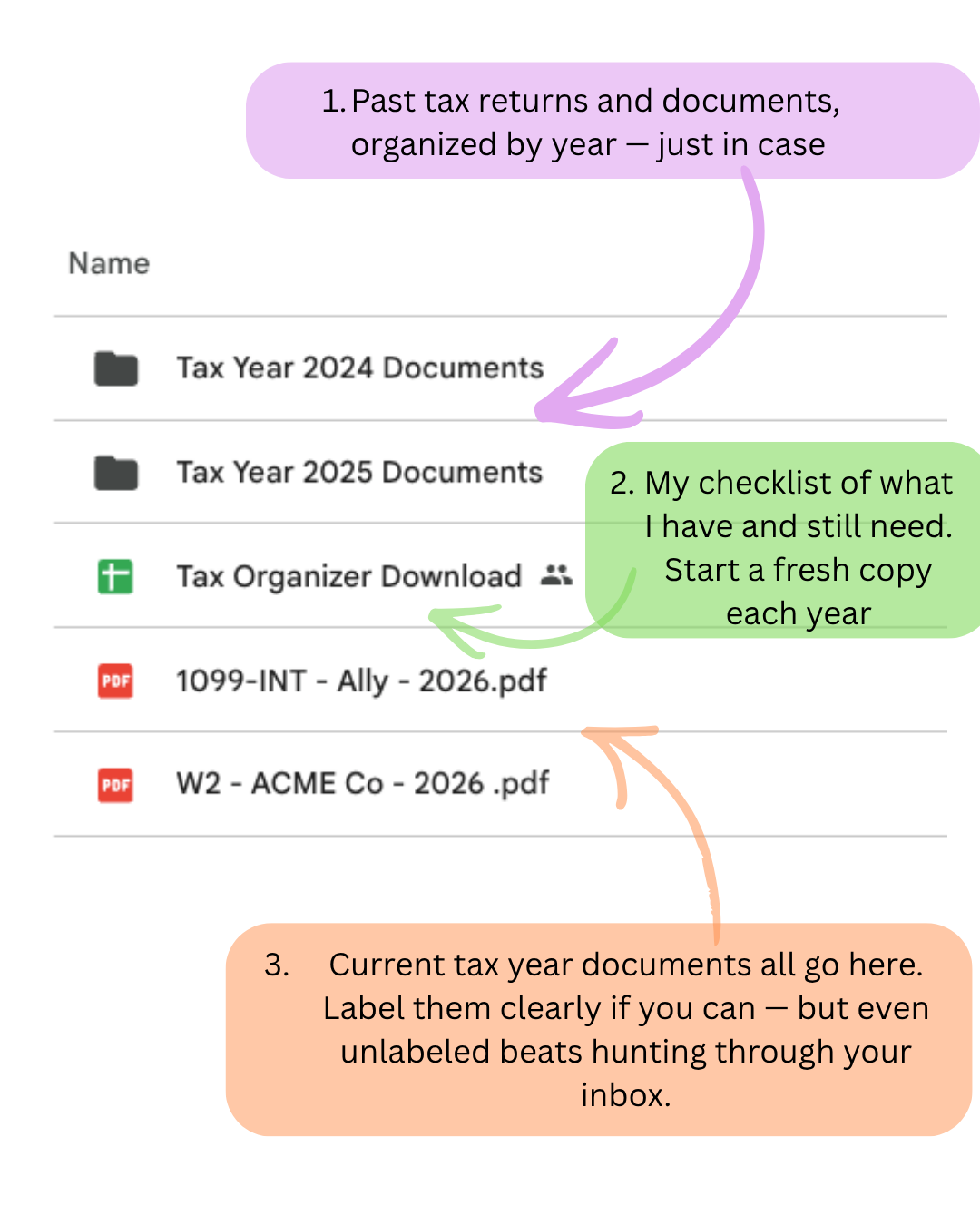
Organizing your Taxes folder in GoogleDrive
Digital folder (recommended): Create a folder in Google Drive (or wherever you store files) labeled "Taxes." Inside, make subfolders for each tax year. Note: organize by tax year, not the date you received the document. That W-2 that arrived in January 2026? That's your 2025 W-2 — it goes in the 2025 folder.
Throughout the year, anything tax-related gets dropped into the current year's folder. Bonus points if you label things clearly and consistently (like "1099-INT Ally 2025"), but even a messy folder beats hunting through your inbox in April.
Physical folder: Keep a labeled folder somewhere you won't lose it — ideally near where you open your mail. When something arrives, either scan it into your digital folder or drop the paper copy here as a backup. Lots of phone apps let you scan documents into a PDF quickly, but on the days that feels like too much, at least the paper document has a home.
What: Know What You're Looking For
This is where most people feel lost. What forms am I even supposed to have?
If you’ve recently filed, let's use this year to create your checklist for next year. Write out a list of all the documents or information that you needed this year in order to file.
Or you can download a copy of my Tax Organizer and then customize it to include the documents relevant to you.
Most of your tax situation stays pretty consistent year to year — same job, same accounts, same deductions. You can update the list if things change (new account, got married, started freelancing), but having that starting point is a game-changer.
While you're at it, note anything that was hard to track down this year — and where you finally found it. Your future self will thank you.
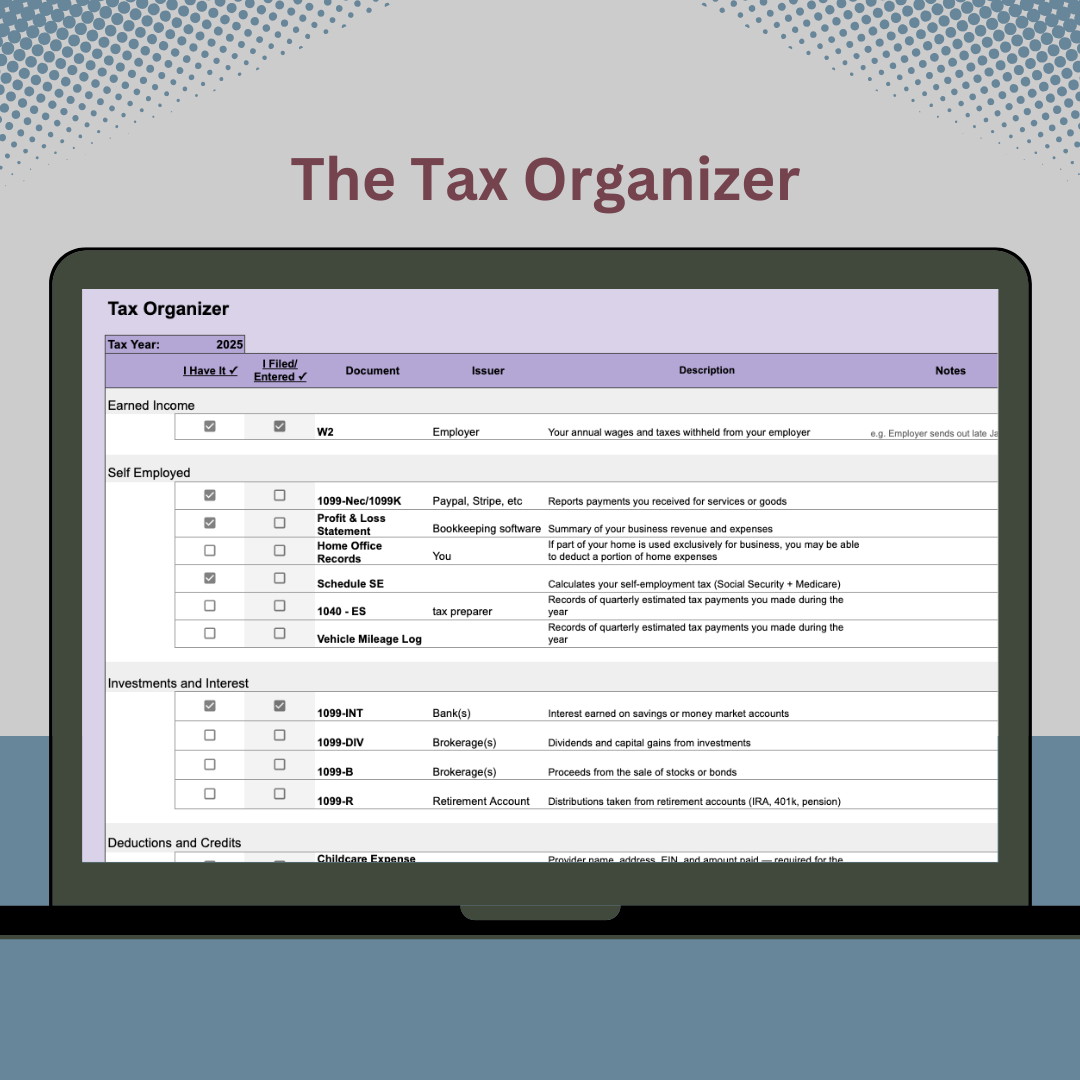
Customize your own
Who: Do you need to hire someone to help?
Did you file yourself this year? Did it go smoothly, or were there parts that left you uncertain? Are you thinking about hiring someone?
Now — not next March — is the time to figure that out.
If you're looking for a tax professional, start asking around now. Ask friends who are in a similar situation to yours: self-employed friends if you're self-employed, coworkers with equity comp if that's your world. And when you ask for a recommendation, ask why they like their person — speed, communication, expertise, well-stocked candy dish in their office, etc. You might have different qualities that you want to prioritize.
If you want to hire someone new, don't wait until next year. Tax pros are slammed January to April. Instead, aim to reach out between June and October when they actually have the bandwidth to meet with you.
If you're filing yourself (TurboTax or similar software), consider if there are questions you're never quite sure you're handling right — now is a great time to research those topics. April 14th is not a good day for nuanced tax reading. A calm Tuesday in June is.
When: Get It on Your Calendar
The more you can avoid the panicked last-minute scramble, the better. A few things worth planning out now:
Note when to expect your documents - and flag any that always run late, so you're not panicking, wondering where they are.
Things to track throughout the year: quarterly estimated tax payments, car registration fees (relevant for some state deductions), charitable donation receipts, and any unusual income - side work, inheritance, sale of a major asset.
Block time on your calendar now - maybe an hour in January to organize documents, and another in March to actually file. You might move it, but having it there is a good nudge.
Tax stuff feels way more manageable when you have a system. If your finances feel chaotic overall and you'd like help creating some structure, schedule a free call with Sarah to see if financial coaching is a good fit.